TSG IntelBrief: Anwar Al-Awlaki: The New Al-Qa’ida Leader in Yemen?
TSG IntelBrief: Iran: Oil, Sanctions, and Risks
TSG IntelBrief: Osama Bin Laden: Death of a Man, Birth of a Martyr?
TSG IntelBrief: Libya, Thinking Ahead
TSG IntelBrief: Iraq: The Forgotten War
TSG IntelBrief: Libya: Mousa Kousa’s Escape, a Classic Intelligence Operation?
TSG IntelBrief: Libya: Are We There Yet?
TSG IntelBrief: Libya: The Journey of a Thousand Miles
TSG Atmospherics: Oil Infrastructure Attacks, Strategy or Stealing?
TSG IntelBrief: Iraq, Oil and Political Fires
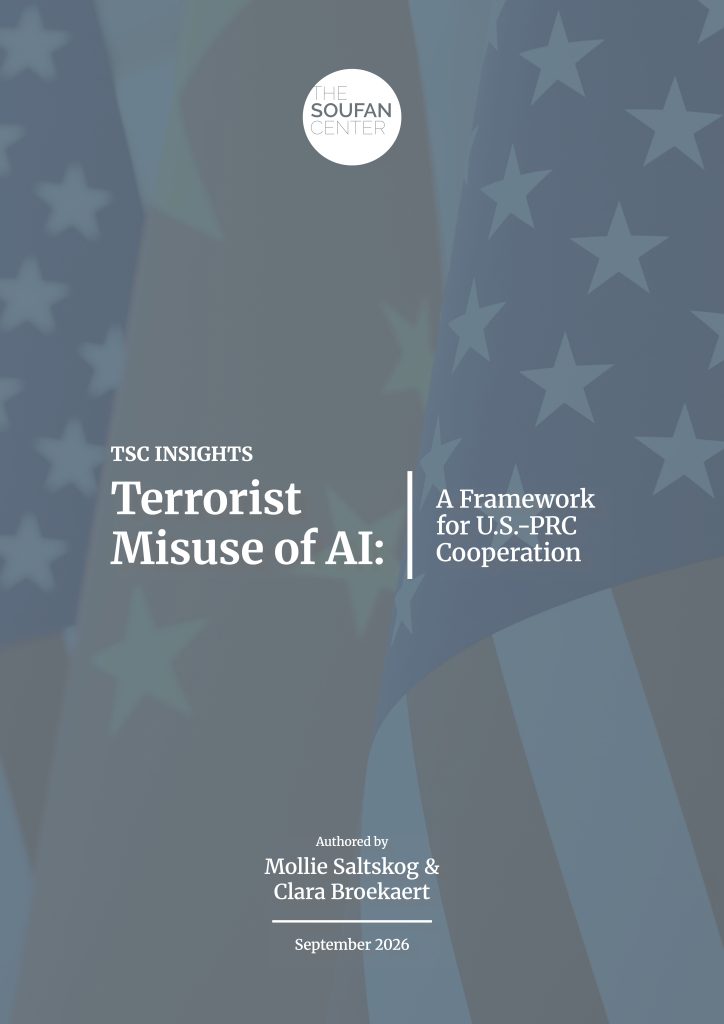
TSC Insights: Terrorist Misuse of AI: A Framework for U.S.-PRC Cooperation
As the United States and China explore areas for AI risk reduction, Terrorist Misuse of AI: A Framework for U.S.–China Cooperation identifies a narrowly defined
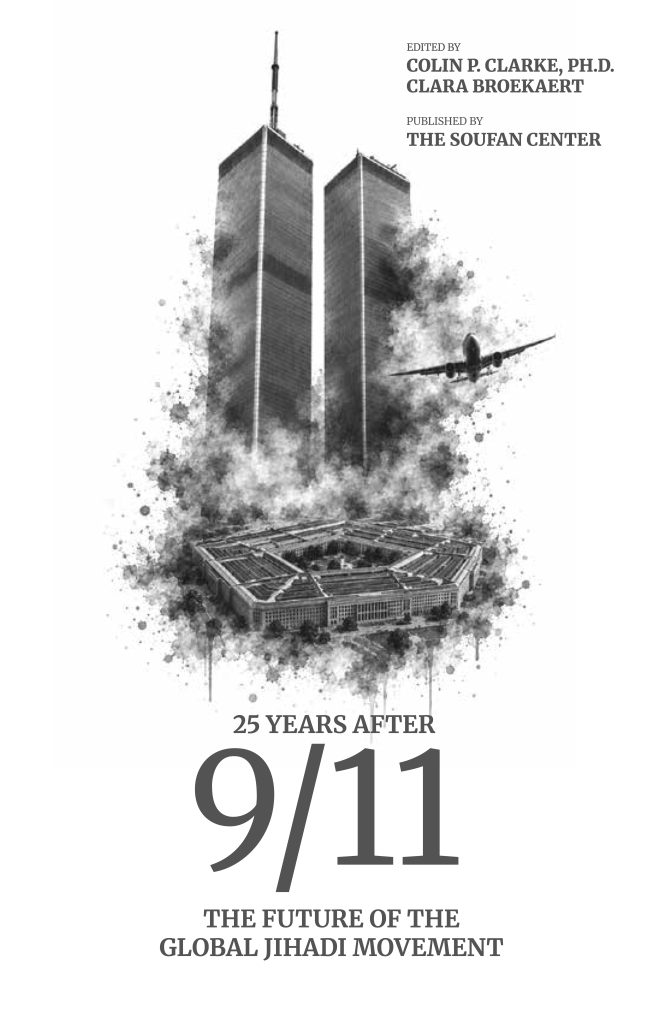
25 Years After 9/11: The Future of The Global Jihadi Movement
Twenty-five years after the September 11 attacks, the global jihadi movement has outlived its founders, its caliphate, and most of the forecasts made about its impending demise.
Closing the Gap: Software Understanding and U.S. National Security
Software is an integral part of every dimension of U.S. national security and civil society. The United States’ ability to project force and defend its interests depends on th
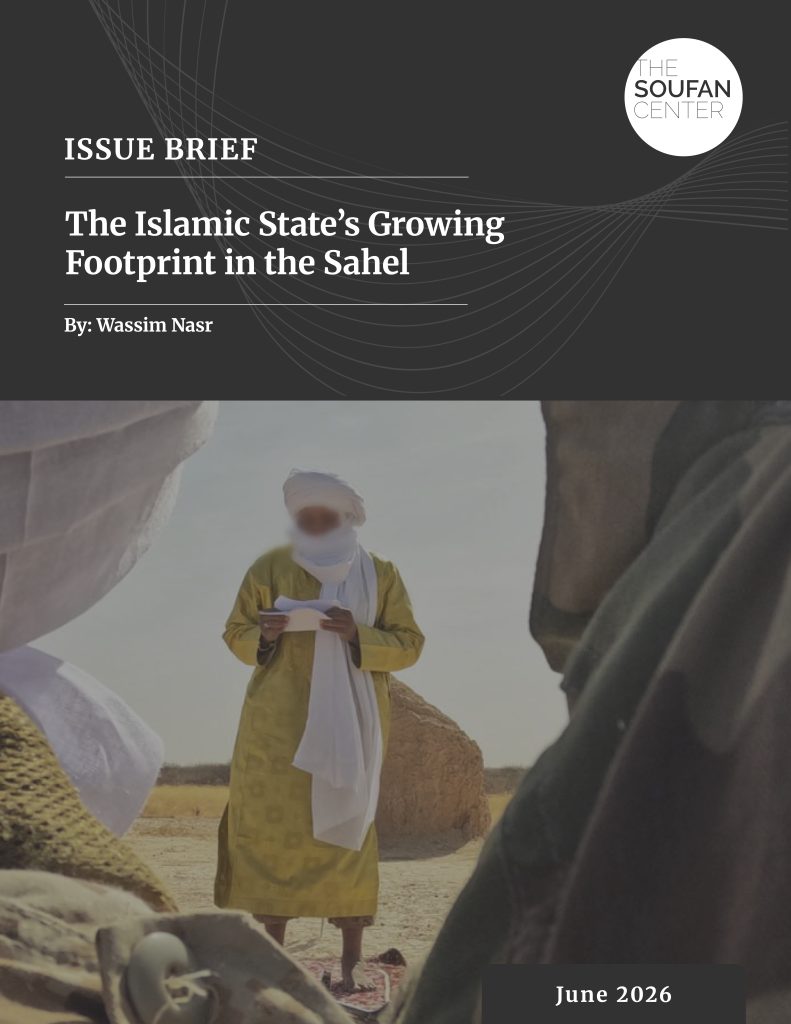
The Islamic State’s Growing Footprint in the Sahel
The Islamic State (IS) has been active in the Sahel region for more than a decade and has entered a new phase as it seeks to consolidate its territorial control in the region. S

Combating Youth Radicalization
Global observers, including in several Western countries, have witnessed a marked rise in acts of extreme violence committed by younger perpetrators. Reflecting on this alarming
Priming, Destabilizing, Coercing: Russian Hybrid Tactics in Europe 2022-2025
This report draws on 255 hybrid incidents targeting six European countries (France, Germany, the United Kingdom, Estonia, Moldova, and Georgia) between February 2022 and Decembe
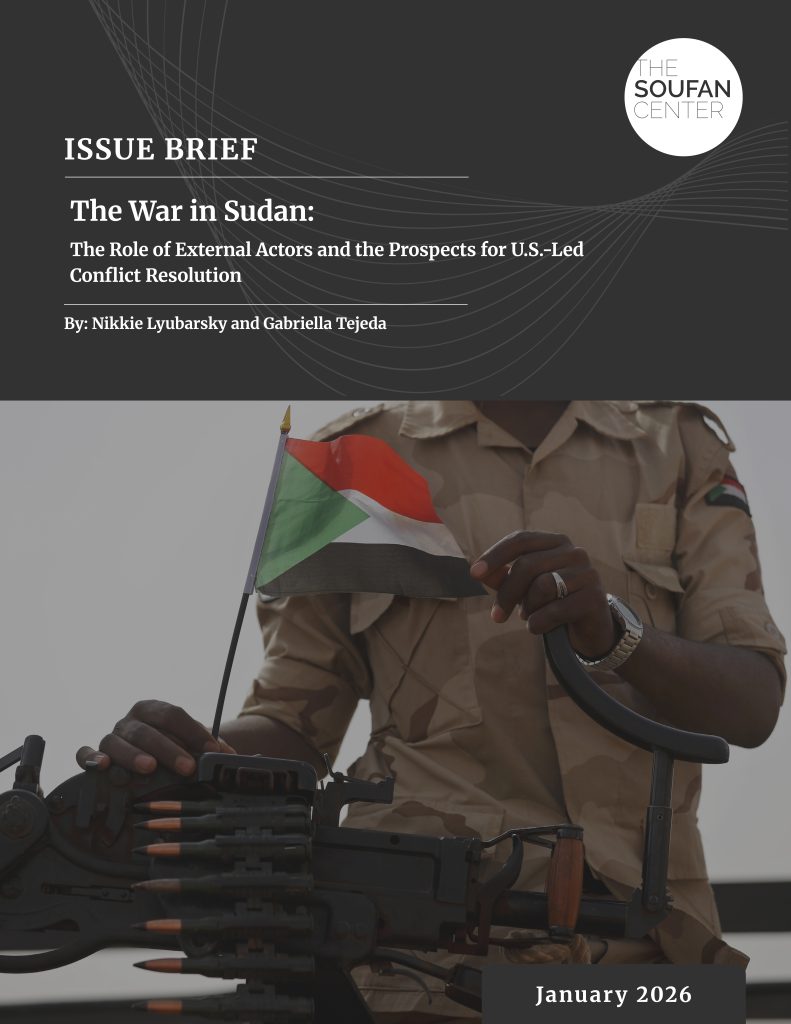
The War in Sudan: The Role of External Actors and the Prospects for U.S.-Led Conflict Resolution
The Sudanese civil war stands out even among the most devastating and complex conflicts in the world today, exacting a catastrophic toll on civilians and unleashing extreme viol
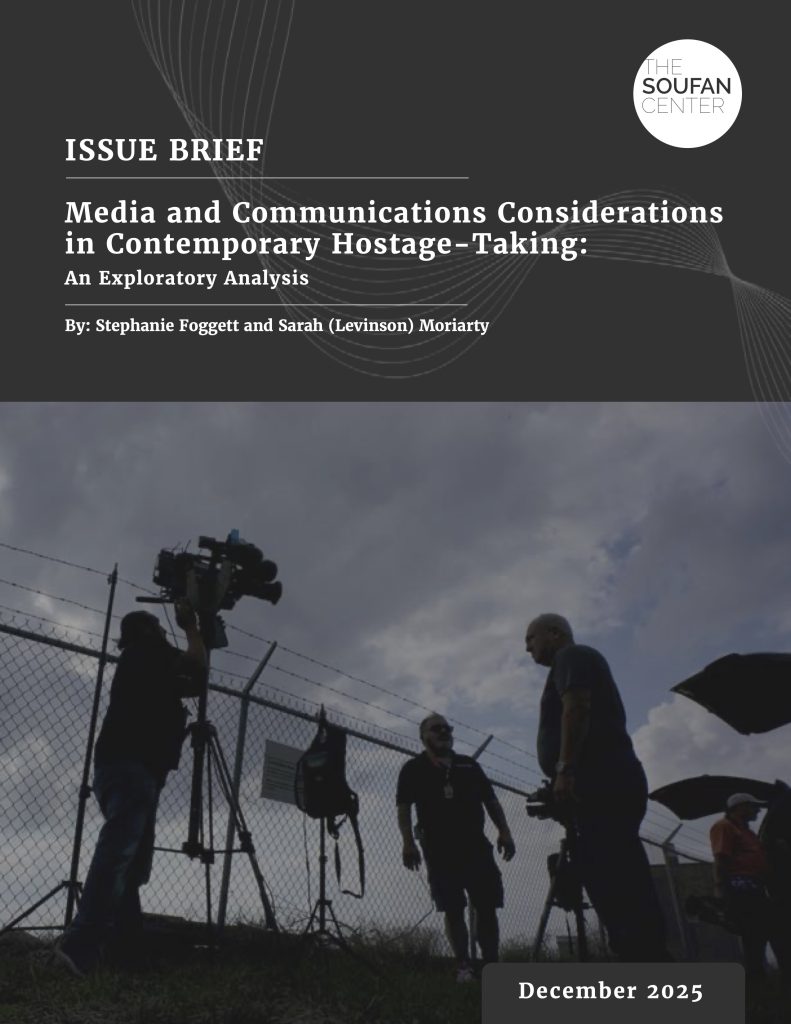
Media and Communications Considerations in Contemporary Hostage-Taking: An Exploratory Analysis
This Issue Brief will explore the relationship between media and contemporary hostage-taking. When a loved one is taken hostage by a state or non-state actor, families of

War Against the Cartels: Prospects and Perils for the Trump Administration’s Military-Led Campaign
It appears the United States may be preparing to start a major, military-led counterterrorism operation against several Mexican drug cartels, and perhaps also against som

TSC Insights: The Legacy and Evolution of Foreign Fighters in Syria
The fall of the Assad regime in December 2024, following the launch of the “Deter Aggression” campaign by Hay’at Tahrir al-Sham (HTS) and allied opposition factions, marke

A Roadmap to Criminal Justice Accountability for SGBV Linked to Terrorism
Since the emergence of the prevalent perpetration of sexual and gender-based violence (SGBV) by terrorist actors as a weapon of warfare, few individuals or groups have faced a

Accelerating Hate: The Impact of October 7 on Terrorism and Political Violence in the West
The horrific attacks by Hamas on October 7, 2023, fundamentally shifted the security posture of the Middle East, while also having severe humanitarian consequences and ripple ef

Great Power Competition In The Twenty-First Century
Rather than a new phenomenon, competition, and hence the possibility of conflict, between states – as well as cooperation – has existed as long as states have interacted. Wh

Identities Destroyed, Histories Revised: The Targeting of Cultural Heritage and Soft Targets by Illicit Actors
On May 27, 1993, a car bomb blasted through the side of the Uffizi Gallery in Florence, Italy, killing five and wounding around thirty others, and destroying hundreds of pricele

Operation Black Lion: Challenges That Lay Ahead of Somalia’s Second Phase of the Offensive
Following a series of clan uprisings against al-Shabaab in the central regions of the country, in August 2022 the federal government of Somalia, working alongside clan militias

Citizens for Leverage: Navigating State Hostage-Taking in a Shifting Geopolitical Landscape
A number of states today are unlawfully detaining foreign nationals within their criminal justice systems for use as foreign policy leverage. Often referred to as “hostage dip

TSC Insights: France’s Missed Moments In Mali
Why did France fail in Mali? French President Emmanuel Macron’s decision to withdraw his country’s remaining troops from Mali in August 2022 followed a nearly decade-long mi

Wagner Group: The Evolution Of A Private Army
In an astonishing turn of events starting 23 June 2023, the Wagner Group’s leader Yevgeny Prigozhin declared all-out war on the Russian state, leading a convoy of mercenaries

TSC Insights: Will Elections Set Turkiye on a New Course?
Among foreign policy watchers, Türkiye’s upcoming vote for president and parliament could be the most consequential election of 2023. Türkiye’s current leader, Rece

Form Over Function? Reviewing the UN Global Counterterrorism Strategy
In 2006, UN Member States did something unusual. Despite being unable to agree on a universal definition of terrorism, and having fought over whether terrorism truly had “root

How Far-Right Terrorists Choose Their Enemies
The decision to attack two mosques in Christchurch, New Zealand in March 2019 was an odd targeting choice. As part of a manifesto released shortly before the violence eru

Lessons Learned from the 1267 Sanctions Regime against Al-Qaeda and Islamic State in Iraq and Syria (ISIS)
To fully understand what impact sanctions could have on violent far-right extremist groups it is essential to have a firm grasp on how sanctions have impacted other terrorist gr

Trends in Violent Far-Right Extremism
countries in countering the threat from the far-right terrorism, and build on that with relevant partners; and strengthen international cooperation to counter the narratives of

Comparing Violent Far-Right Terrorist Designations among Five Eyes Countries
This paper seeks to examine the array of terrorist designations undertaken by “Five-Eye” (FVEY) countries (i.e. Australia, Canada, New Zealand, the United Kingdom, and the U

Lessons Learned from Listing Violent Far-Right Extremist Groups in Canada
In June 2019, Canada listed two violent far-right extremist groups as terrorist entities: Blood and Honour and Combat 18, the first listings of their kind in Canada. In February

Foreign Fighters, Volunteers, and Mercenaries: Non-State Actors and Narratives in Ukraine
When Russian President Vladimir Putin claimed that Russia’s unprovoked military invasion of Ukraine was launched to pursue the “de-Nazification” of Ukraine, it evoked a le

Promoting Democracy and Security in Africa: Don’t Forget Cities
Speaking in Abuja last fall, U.S. Secretary of State Antony Blinken implored African governments to enact reforms in response to their citizens’ demands for better governance.

A Perfect Storm: Insurrection, Incitement, And The Violent Far-Right Movement
The Capitol Insurrection in the United States on January 6, 2021, sent shockwaves around the world. From London to Canberra, and Ottawa to Auckland, millions watched as a mob of

The Road to 9/11 and the Dangers Ahead
Twenty years ago, in the fall of 2001, having already spent years chasing Osama bin Laden, I found myself near Kabul, standing in one of the al-Qaeda leader’s safehouses—or

Diminished, but not Defeated: The Evolution of al-Qaeda Since September 11, 2001
Over the past twenty years, al-Qaeda has proven to be resilient and adaptive in its efforts to survive the Global War on Terror (GWOT). Twenty years after the attacks of Septemb

Bringing Terrorists to Justice: Prosecuting ISIL War Crimes and Terrorism
In his final briefing to the United Nations Security Council in May 2021, the Special Adviser and Head of the United Nations Investigative Team to Promote Accountability for Cri

Countering Terrorist Financing: Lessons Learned for Tackling Far-Right Terrorism
In a post-9/11 world, the international community has devoted significant attention and resources to countering the financing of terrorist groups. For the most part, over the pa

Countering Terrorist Narratives & Strategic Communications: Lessons Learned For Tackling Far-Right Terrorism
In the two decades following the terrorist attacks of September 11, 2001, the international community has largely focused on countering the terrorist threat posed by groups like

Terrorism and Counterterrorism in Southeast Asia: Emerging Trends and Dynamics
In the last three years, Indonesia and the southern Philippines have seen something new: women carrying out suicide bombings – some with their husbands, some with their childr

The Decade of Defiance & Resistance: Reflections On Arab Revolutionary Uprisings And Responses From 2010 – 2020
The dynamics fostered by the wars and revolutions plaguing many Arab states today represent the most consequential national transformations since World War I, culminating in a p

Quantifying The Q Conspiracy: A Data-Driven Approach to Understanding the Threat Posed by QAnon
A May 2019 intelligence bulletin from the Federal Bureau of Investigation’s (FBI) Phoenix office labeled conspiracy theories as a domestic terrorism threat for the first time.

A Way Forward With Iran? Options for Crafting a U.S. Strategy
Any discussion of a Biden administration strategy on Iran must begin with an analysis of how previous U.S. administrations have approached the threat posed by Iran. From the ver

The Atomwaffen Division: The Evolution of the White Supremacy Threat
The Atomwaffen Division (AWD) is a dangerous neo-Nazi extremist network with a rapidly growing international footprint. While AWD has roots in the United States and became notor

Inside The Russian Imperial Movement: Practical Implications of U.S. Sanctions
Over the past several years, high-profile terrorist attacks by violent white supremacist extremists have gained worldwide attention and thrust the movement onto the front page o

The Nexus between Human Security and Preventing/Countering Violent Extremism
Preventing/Countering Violent Extremism (P/CVE) approaches are unlikely to succeed in the long term without addressing a range of structural factors, specifically political, eco

White Supremacy Extremism: The Transnational Rise of the Violent White Supremacist Movement
From Pittsburgh to Poway and Charleston to El Paso, white supremacist extremists (WSEs) pose a clear terrorist threat to the United States. And while extremist groups operating

Iran’s Playbook: Deconstructing Tehran’s Regional Strategy
To view Iran’s foreign policy posture as strictly a state sponsor of terrorism is short-sighted and fails to appropriately capture the comprehensive nature of how Iran operate

Al-Qaeda in the Indian Subcontinent (AQIS): The Nucleus of Jihad in South Asia
Seventeen years after the 9/11 attacks, al-Qaeda has survived, due in large part to a deliberate strategy focused on gaining the support of the masses by “going local.” Al-Q

The Forgotten War: The Ongoing Disaster in Yemen
The humanitarian and security catastrophe in Yemen may result in a global security crisis, as the country further devolves into sectarianism and violent groups gain even stronge

Beyond the Caliphate: Foreign Fighters and the Threat of Returnees
As the so-called Islamic State (IS) loses territorial control of its caliphate, there is little doubt that the group or something similar will survive the worldwide campaign aga

Syria: The Humanitarian-Security Nexus
As the Syrian civil war marks its sixth anniversary in March 2017, the plight of Syrian civilians who have been forced to flee their home country over the past six years continu

Libya, Extremism and the Consequences of Collapse
In a new, in-depth report, The Soufan Group (TSG) examines the security implications of continued instability in Libya. Four years after the revolution that toppled Muammar Qadh

Foreign Fighters
In June 2014, The Soufan Group (TSG) released its initial Foreign Fighters in Syria report, which identified approximately 12,000 foreign fighters from 81 countries. Nearly eigh

The Islamic State
The self-styled Islamic State is an accident of history, emerging from multiple social, political, and economic tensions in the Middle East and beyond. It has challenged the ter

Foreign Fighters in Syria
Over 12,000 fighters from at least 81 countries have joined the civil war in Syria, and the numbers continue to grow. Around 2,500 are from Western countries, including most mem