
INTELBRIEF
September 8, 2026


Repercussions of Intensified Fighting in Lebanon
Bottom Line Up Front
- Israel has claimed to have captured a key Lebanese Hezbollah stronghold in southern Lebanon, introducing an additional hurdle to efforts by regional mediators to de-escalate regional tensions and re-establish a U.S.-Iran truce.
- The Israeli offensive against the Hezbollah command and missile center at Ali al-Taher Ridge leaves all but dead a U.S.-brokered agreement from June under which Israel agrees to cede territory taken from the militants and give it to the forces of the sovereign Lebanese government in Beirut.
- U.S. officials apparently did not insist that Israel halt its offensive, potentially threatening a return to the June U.S.-Iran Memorandum of Understanding that applies a U.S.-Iran ceasefire to “all regional fronts.”
- Iran did not implement its threats to attack Israel if it stormed the Ridge, suggesting it wants to avoid drawing Israel back into the U.S.-Iran war.
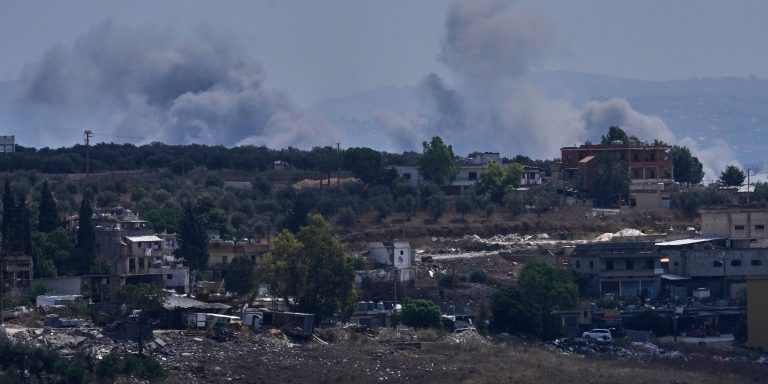
Israel’s offensive to capture Lebanese Hezbollah’s major stronghold at Ali al-Taher Ridge last week will reverberate far beyond the battlefield in southern Lebanon. At stake in the battle was not only the fate of a 2024 Israel-Hezbollah ceasefire and burgeoning ties between Israel and Lebanon, but also whether U.S. President Donald Trump’s team will be able to forge a war-ending accord with Iran in advance of the November U.S. midterm elections. Israel claimed Hezbollah was using the stronghold — described by some in the region as Hezbollah’s “mini-Pentagon” — to plan attacks on Israel. But the Israel Defense Forces (IDF) advance and apparent capture of the ridge went beyond Israel’s understanding with President Trump’s team that Israel would confine its military operations to retaliatory, rather than offensive, operations against the Iran-sponsored group.
U.S. officials say they recognize Israel’s strategic interest in weakening and ultimately disarming Hezbollah, which joined Hamas’ battle against Israel after the October 7, 2023 attack and Iran’s war against the U.S. and Israel after Epic Fury began on February 28. But since reaching a June memorandum of understanding (MOU) with Iran, the U.S. has pressured Israeli Prime Minister Benjamin Netanyahu to limit IDF operations against Hezbollah to retaliatory attacks, in order to not openly violate applicable ceasefires and risk inciting Iran-backed militias that could help break an agreement with Iran. U.S. officials have noted that Iran’s leaders consider efforts to defeat Hezbollah as a “red line” that could set off Iranian escalation against U.S. allies in the region or, at the very least, hinder Trump’s efforts to terminate the Iran war. Iran helped build Hezbollah’s militia wing in the early 1980s. It has since looked to the group as a vicar of Iran’s own 1979 Islamic revolution and a vehicle for Iran to exercise “forward defense” and regional power projection. Even though Hezbollah has been severely weakened by Israeli offensives and no longer serves as a significant power projection vehicle for Iran, the regime in Tehran still harbors hope for rebuilding the group’s capabilities and considers preserving it as a vital interest.
Against that backdrop, the Israeli government has long assessed the Ali a-Taher Ridge as a key threat whose capture would be pivotal to weakening Hezbollah strategically, no matter the diplomatic fallout. The ridge occupies a commanding geographic position overlooking Nabatiyeh, the Litani River, and approaches to Iqlim al-Tuffah and toward the Hula Valley, forming part of the military architecture Hezbollah used to threaten northern Israel. IDF officers have told journalists that Hezbollah has a “strategic” underground facility beneath the Ali al-Taher Ridge, which serves as the “nerve center” of the terror group’s Badr unit, a major military formation responsible for the group’s operations in southern Lebanon. Two years ago, Hezbollah unveiled the Imad (missile city) beneath the Ali Taher hills, featuring a reported 30 miles of tunnels that had been equipped over two decades using Iranian funds. The missile city reportedly contained thousands of missiles and hundreds of launchers. To help run and guard the facility, a reported dozen Iranian Islamic Revolutionary Guard Corps-Quds Force (IRGC-QF) officers were deployed alongside the several hundred Hezbollah members there.
In the context of the U.S.-Iran war, Netanyahu and his team decided the stronghold needed to be dismantled by force. Israeli forces began to surround the ridge three months ago, imposing a state of siege that included shooting down drone deliveries of food and water to the facility to compel the Hezbollah and IRGC units to abandon it. Israel and Lebanon at first agreed to offer Hezbollah an opportunity to leave the ridge and hand the stronghold over to the Lebanese Armed Forces (LAF), according to the Nidaa Al-Watan outlet. A handover of the ridge facilities to the LAF would have been commensurate with and supportive of a June U.S.-brokered accord between Israel and Lebanon to empower the LAF to take over positions captured from Hezbollah. However, Hezbollah and the IRGC refused to cede the stronghold to the LAF, evidently calculating that the U.S. would restrain Netanyahu from violating the June accord with Iran.
Last week, Israeli leaders brushed aside the potential diplomatic fallout and moved to capture the ridge, with plans to demolish the center and its extensive tunnel network. Whether the area will eventually be handed to the LAF is unclear. On Friday, Israeli leaders claimed control of the stronghold, although some Lebanese sources countered that Israel had captured only a few facilities on the ridge. An Israeli military spokesperson said last week that no Iranian personnel have been identified among those captured in Israel’s offensive in the area thus far, suggesting any IRGC-QF personnel fled before the stronghold was captured. Some experts have assessed the apparent fall of the stronghold could serve as a springboard for Israel to move further north, toward Beirut. However, Israel’s defense minister, Israel Katz, seemed to suggest that the offensive would not proceed further, saying the capture of Ali al-Taher Ridge “… marks the completion of control over the security zone in south Lebanon.”
Israel’s storming of the ridge immediately placed in jeopardy efforts by regional mediators, including Pakistan, Qatar, and Oman, to return the U.S. and Iran to the negotiating table to end the war with Iran. In mid-August, according to several regional officials, Iran sent a message to Washington, via Oman, warning that an Israeli capture of Ali al-Taher would cross Iran’s red lines. Hezbollah echoed that message through its media office, stating: “Iran considers any Israeli move on the ground in southern Lebanon, especially territorial expansion, a major violation of the Islamabad Agreement (U.S.-Iran Memorandum of Understanding).” The Hezbollah statement refers specifically to the first article of the MOU, which requires that a U.S.-Iran ceasefire apply to “all regional fronts,” including Lebanon. Hardline officials in Tehran have stated — both before and since the Israeli capture of the ridge — that Iran will not return to the MOU, or any other roadmap to ending the war, unless the U.S. implements its commitments to end Israel’s offensive activity in Lebanon, Gaza, and other regional theaters. But Iran did not implement threats to attack Israel if it stormed the stronghold, suggesting that Iranian leaders do not want to add to the U.S. economic and military pressure on it by triggering Israel’s re-entry into the Iran war. Iran’s lack of military reaction to the Ali al-Taher battle might also signal that Iran remains open to diplomacy with the U.S., despite comments to the contrary by regime hardliners.
The Israeli offensive also jeopardizes a process of U.S.-backed negotiations between Israel and Lebanon in Rome. To date, the two governments have held eight rounds of talks since April, intended to pave the way for an Israeli withdrawal from Lebanon and the gradual disarmament of Hezbollah’s militia. More broadly, the talks are intended by the Trump team to set conditions for an eventual normalization of the two nations. But the Israel-Lebanon peace process is contingent on a full Israeli withdrawal from Lebanon and the ability of the LAF to serve effectively as the sole source of armed force in the country. The Israeli offensive against Ali al-Taher illustrated the weakness and inability of the Lebanese government and the LAF to compel Hezbollah to disarm. Another round of talks in Rome was expected on September 1 but, because of the Israeli assault, has been postponed. Still, the Netanyahu government has signaled it wants to continue the Israel-Lebanon peace process, and it undertook a confidence-building measure last week by releasing five Lebanese citizens detained by the IDF in recent operations.
The Trump team’s messaging on the battle for Ali al-Taher has been inconsistent, suggesting that U.S. officials were unsure how the combat might affect the broader U.S.-Iran chessboard. Recognizing an Israeli assault on the ridge would jeopardize efforts to end the Iran war, as well as an Israel-Lebanon peace process, the Trump team reportedly pressed Israel to put off storming the stronghold. Yet a White House official denied those accounts, telling journalists reports that it had tried to force Israel to halt the offensive were “…not accurate.” The U.S. refusal, or failure, to block Israel from conducting a final assault on the ridge might have represented a U.S. calculation that the fall of the facility might in fact benefit the U.S. position by weakening Iran’s leverage. All indications are that IRGC hardliners view the fall of the stronghold as a significant blow — a perception that might fuel their argument that Iran needs to escalate its battle against the U.S. in order to preserve its core interests.