
INTELBRIEF
September 24, 2026


Summit Meetings Raise Hopes for an End to the Iran War
Bottom Line Up Front
- This week’s flurry of summit meetings between President Trump and the leaders of China and major regional states, along with a resumption of U.S.-Iran talks, is raising hopes that an Iran war settlement is imminent.
- Diplomatically and economically isolated by U.S. pressure, Iranian hardliners appear to be narrowing Iran’s conditions for an end to attacks on shipping in the Strait of Hormuz.
- During the state visit of People’s Republic of China’s President Xi Jinping, which begins Thursday, President Trump will try again to enlist Xi’s help in pressuring Iran to accept a resolution.
- On the sidelines of the 81st UN General Assembly meetings in New York, regional leaders pressed Trump not to escalate military operations against Iran and instead focus on a diplomatic solution.
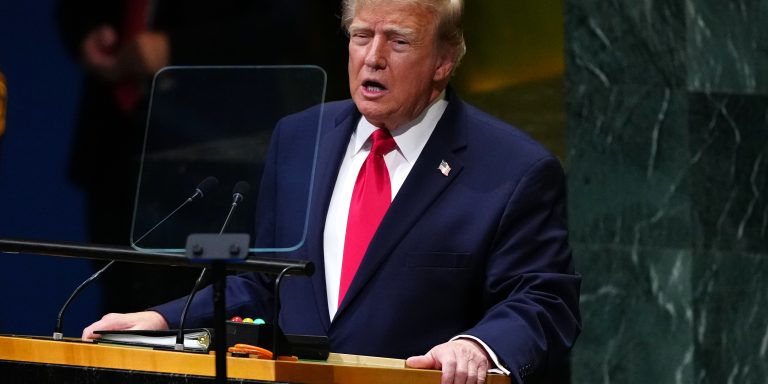
Kicking off a week of summit diplomacy that U.S. officials hope will end the Iran war, U.S. President Donald Trump addressed the 81st UN General Assembly (UNGA) Tuesday morning, offering Iran a bright future if it settles the conflict but threatening further hardship if it insists on maximalist conditions. Trump’s UNGA speech set the stage for his substantive meetings with regional leaders later on Tuesday, all of whom discouraged Trump from escalating militarily in what they argue would be a failed effort to force Iran’s “surrender.” The President of the People’s Republic of China (PRC), Xi Jinping, a key stakeholder who can wield significant influence on Iranian leaders, begins a state visit to Washington on Thursday. On Sunday, Trump told journalists he was open to meeting with Iranian President Masoud Pezeshkian on the sidelines of the UNGA sessions. Although the two presidents did not meet, a lower-level, indirect meeting was convened, the first in-person U.S.-Iran discussions since June.
Leaders of the Arab Gulf states and other regional powers are urging U.S. officials to take advantage of what appears to be a narrowing of Iranian demands for a settlement with Washington. Reflecting new Iranian flexibility, Kyodo News on Tuesday quoted a “senior Iranian government official” as saying that Iran would fully reopen the Strait of Hormuz within seven days if the United States takes initial steps to end its naval blockade of Iranian ports. Reported Qatari efforts to arrange U.S.-Iran talks, even if not at the leadership level, appeared to bear fruit Tuesday with a three-hour indirect meeting between Trump envoys Steve Witkoff and Jared Kushner and Iranian Foreign Minister Abbas Araghchi. As has been the past practice, mediators — in this case Qatar’s Prime Minister Mohammed bin Abdulrahman Al Thani — shuttled between the two delegations. Trump told journalists after the discussions: “I think there’s a lot of momentum for them to make a deal.” He stated another meeting would be held in the “very near future,” but no immediate U.S.-Iran diplomatic breakthrough was announced.
Signs of Iranian flexibility might be attributed to recent signals from Iran’s ally, Beijing, that the war in Iran needs to conclude. China has supported Iran diplomatically as a victim of U.S. aggression and as a partner, more broadly, in Beijing’s effort to counter what China sees as a U.S. ambition for global hegemony. Even though China, as Iran’s largest pre-war oil customer, would benefit from a reopening of the Strait of Hormuz, Trump officials have encountered resistance when urging Beijing to use its considerable economic leverage to press Tehran to end the war. China has not, to date, felt pressure to use its diplomatic and economic weight to end the conflict because Beijing has found alternative oil suppliers, cut oil consumption, and drawn down some of its nearly 1.5-billion-barrel strategic oil reserve.
However, in recent weeks, Xi has indicated a shift toward a more active role in ending the conflict — giving Trump an opening when the two leaders meet on Thursday. At a summit of the BRICS bloc of Global South powers in New Delhi last week, Xi urged the assembled leaders to act as peacemakers in the Middle East conflict, and said China was willing to work with them towards that goal. Xi hinted China might play an explicit mediation role. However, Xi did not, at the BRICS summit or since, announce any imminent Chinese mediating initiative on Iran.
As part of his effort to enlist Xi’s help on Iran and achieve clear results from the summit, more broadly, Trump will continue to downplay U.S. complaints about China’s material support for Iran’s war effort. China’s links to Iran’s military capabilities drew the attention of senior U.S. officials last week after the Wall Street Journal reported that Iran had obtained high-resolution satellite images from Chinese entities before carrying out a July ballistic missile attack on a U.S. military base in Jordan that killed three American soldiers. Trump dismissed that incident and broader allegations that China has provided military supplies to Iran, saying Xi has “… behaved reasonably well” on Iran. Some reports indicate China has resupplied Iran with chemicals used to produce solid fuel for ballistic missile propulsion, but other reports suggest the material was delivered to Iran long before the war began. In July, Reuters reported a Chinese company was set to supply Iran with hundreds of portable anti-air missile systems to help Iran rebuild the air defenses devastated by U.S. and Israeli air strikes. That report came just days after Trump reiterated that Xi had assured him Chinese firms would not arm Tehran. None of these allegations or reports is likely to receive much U.S. official discussion during Xi’s visit.
For its part, Beijing has largely muted its public opposition to U.S. secondary sanctions aimed at hermetically sealing Iran off from global commerce — sanctions that have harmed China’s economy. As part of the U.S. “Operation Economic Outcast,” the U.S. Treasury Department has added a large number of China-linked oil refineries, companies, and financial channels to its sanctions lists for their transactions with Iran. Hundreds of Chinese firms had already been sanctioned under pre-existing U.S. sanctions laws enacted prior to the war. However, seeking to avoid a broader rift with Beijing, the U.S. has not penalized larger Chinese banks to date. And U.S. officials have not sought to block China from purchasing Iranian oil stored offshore during the weeks of June and July, when the U.S. blockade was not in force. In talks in advance of the Xi visit, Secretary of the Treasury Scott Bessent told CNBC on Monday that the U.S. and China discussed the Iran sanctions issue during weekend meetings with Chinese officials, stating: “Having quiet behind-the-scenes discussions are better than having a public display.” He added that Chinese financial authorities “have been very engaged [with the U.S. in the Iran sanctions implementation process].” Yet on Wednesday, China’s Foreign Ministry confirmed it will allow Iranian airlines to keep flying into its airports, opposing what it calls unfair U.S. unilateral sanctions without UN backing. The move came after the U.S. imposed sanctions that deprive suppliers to Iranian air carriers access to U.S. dollar transactions, causing the cancellation of many Iranian flights around the region.
During his visit, Xi is likely to amplify the Arab Gulf monarchies’ and other regional states’ calls for de-escalation. The six Gulf states have borne the brunt of Iranian retaliation and assert they have a direct and material stake in shaping the resolution of the conflict. In their meeting with Trump Tuesday on the sidelines of the UNGA debate, leaders and senior officials of the six Gulf states were joined by President Recep Tayyip Erdogan of Türkiye, President Ahmed al-Sharaa of Syria, King Abdullah II of Jordan, Lebanese Prime Minister Nawaf Salam, Iraq’s Prime Minister Ali al-Zaidi, and the Prime Minister of Egypt, Mostafa Madbouly. In the session, the regional states reportedly urged Trump to push for a settlement and avoid escalation in an effort to regain U.S. leverage. The regional leaders expressed doubts that another round of escalation would compel Iran’s hardline leaders to accede to maximum U.S. demands, given that previous rounds had made no apparent progress toward that goal. The leaders of several Gulf states, including Qatar and Oman, have been key mediators who have worked with both U.S. and Iranian officials to try to craft an acceptable settlement. President Trump indicated that the U.S. is working to achieve a settlement that protects U.S. interests but stressed any outcome must ensure Iran cannot develop a nuclear weapon. He threatened new strikes, if necessary, including against the suspected nuclear facility at Pickaxe Mountain.
It is not clear whether the Tuesday meeting included significant discussion of the Yemen front — a conflict that is consuming Saudi Arabia. The Kingdom perceives that an end to the Iran war might help de-escalate attacks on its infrastructure by Houthi fighters. In recent weeks, the Houthis have achieved significant gains in ground combat against Saudi-backed forces of the Presidential Leadership Council (PLC) that controls southern Yemen. However, although the outbreak of renewed conflict in Yemen is related to the Iran war, it is not clear that a U.S.-Iran settlement will immediately translate into a ceasefire in Yemen. Deciding not to expand the Iran war or jeopardize a settlement with Iran, Trump has refused Saudi leadership requests to intervene in Yemen, causing not only the Kingdom but other Gulf states to question the U.S. security umbrella they have long relied on.