
INTELBRIEF
September 22, 2026


Fallout from Hormuz: Grievances over Fuel Prices and Supply Shortages Spark Global Protests
Bottom Line Up Front
- The rising cost of energy products like diesel and petroleum has sparked protests — even turning into violent clashes and riots — around the world in Syria, Guatemala, Portugal, France, and the Philippines.
- Governments are experiencing increased political friction as the availability and cost of key energy products and household items, such as kerosene, steadily rise ahead of winter.
- Countries are also experiencing a severe supply shortage of other key resources, such as fertilizer and helium, stunted by strikes on oil tankers, increased costs of farming inputs, and blocked sulfur and nitrogen exports.
- While public grievances and demonstrations may push governments to approve subsidies and temporary price caps, prices will continue to rise as the U.S.-Iran war — and its resulting chokehold on key trade pathways like the Hormuz and Bab el-Mandeb Strait — endures.
As the Iran war’s chokehold on key maritime passageways has drawn out, rising global supply shortages of key resources like fuel, fertilizer, helium, and other products have sparked increasing concern, public demonstrations, and even riots around the world. Just days after oil prices climbed above $100 per barrel, protests and riots erupted in Syria, Guatemala, France, and the Philippines, with the potential for further demonstrations elsewhere in the international community as the cost of living continues to rise. These protests will have a direct impact on political legitimacy and could destabilize governments perceived as either unwilling or unable to provide basic services and fuel subsidies to their populations, leading to second-order effects with major implications. War and conflict always have spillover effects beyond their borders, but the Iran war has been a case study of a regional conflict with global ramifications far beyond what many anticipated.
As the fighting intensifies across the Gulf — with continued U.S. strikes on Iranian oil tankers, Houthi consolidation of the Bab el-Mandeb Strait and strikes on Saudi Arabia, and continued diplomatic breakdown — many countries with households dependent on heating oil are facing a bleak winter of rising prices and increased political friction over the cost of living.
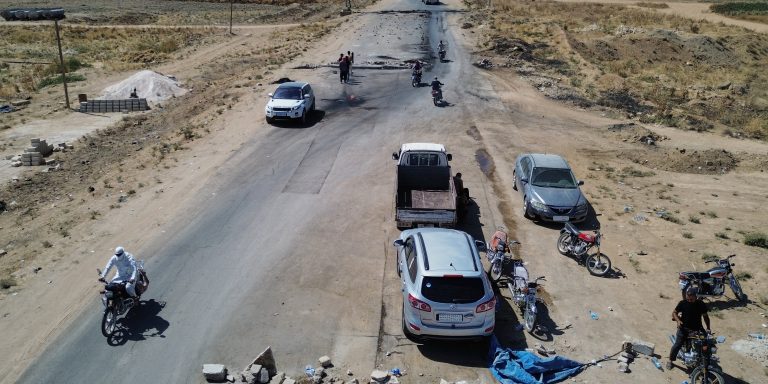
In Syria, the uptick in fuel prices ignited the largest demonstrations in the country since the collapse of the Assad regime. Syrians across cities such as Aleppo, Idlib, Hama, and Dara’a took to the streets to protest, burned tires, blocked roadways, and even stopped oil tankers in response to the government’s decision to increase diesel prices by 40 percent and gas prices by 25 percent. Protestors in Guatemala also demonstrated frustration with fuel prices due to global increases in crude oil prices. Protesters gathered into large squares with signs in cities like Guatemala City, while truckers and vehicles blocked key highways. The fuel price crisis in Guatemala is colliding with the severe El Niño droughts that have caused mass crop failures. In Espinho, Portugal, protestors gathered outside the residence of Portuguese Prime Minister Luís Montenegro. In France, fisherman in coastal enclaves like Fos-sur-Mer blocked fuel depots and even violently clashed with local police forces, while bus drivers and motorists employed by transportation companies went on strike in the Philippines over the rising cost of diesel and kerosene.
Some countries, such as Guatemala, Portugal, and the Philippines, have rushed to respond to demonstrations and public outcry over fuel pricing. Guatemalan congressional representatives are currently exploring legislative initiatives to freeze energy prices until the end of the year, paying government subsidies to fuel importers that sell above the approved rate. The Portuguese government announced a relief package for different sectors afflicted by the hike in energy prices, such as fire brigades, emergency responders, cargo carriers, and cab drivers. In the Philippines, the government is also reportedly considering a reduction in excise taxes on energy products like petroleum. In countries like Ireland, farmers have signaled further public demonstrations and actions, such as the blockade of fuel depots, over increased petrol and diesel prices.
Helium shortages have led to problems for tech companies, as helium is used in multiple stages of the chipmaking supply chain, including cooling, leak detection, and precision manufacturing. Outside of the United States, the largest producers of helium include Qatar, Russia, and Algeria. Electronics, automobiles, and smartphones are all impacted by the disruption to helium supplies. Fertilizer production, for its part, has also suffered, leading to a rise in food prices and a shortage of key agricultural products. Input costs have skyrocketed, and crop yields have been threatened. According to the World Trade Organization (WTO), trade in urea and phosphate fertilizers has been severely disrupted by the war in Iran and economies across Africa and Asia remain vulnerable to both fertilizer shortages and price hikes.
Even as national governments seek to respond to the consequences of the blockade of the critical Hormuz chokepoint to assuage their constituents, domestic policy will not, in the long term, alleviate a crisis with an external cause. While some governments have begun exploring alternative ways to transport oil from the Middle East that bypass the Strait of Hormuz, the renewed conflict between the Houthis and Saudi Arabia, as well as strikes by Iran-backed Iraqi groups against Saudi Arabia, once again casts a shadow over some of these solutions, including the East-West crude pipeline, which has been closed since September 11. So far, the spike in oil prices has not nudged global audiences to advocate more assertive foreign policy to undo the blockade in the Persian Gulf. Instead, national governments, including those from countries with limited foreign policy relevance in the Middle East, have become primary targets and have seen their legitimacy challenged.