
INTELBRIEF
September 11, 2026


The Day That Changed History: 25 Years After the 9/11 Al-Qaeda Attacks
Bottom Line Up Front
- On the twenty-fifth anniversary of the September 11, 2001, terrorist attacks, al-Qaeda (AQ) is a shell of its former self, with its leader in hiding for over two decades and no successful high-profile attack in the West for many years.
- Both AQ and the Islamic State (IS) are living vicariously through their satellites and franchise groups, some of which are able to control large swaths of territory, like Jama’at Nusrat al-Islam wal-Muslimin (JNIM) and al-Shabaab, or mount high-profile attacks, like Islamic State Khorasan Province (IS-K).
- Attacks inspired by Islamic State and conducted by home-grown violent extremists are persistent, though ideological coherence and understanding of perpetrators are often weak.
- The past twenty-five years have shown us that significant investment, sacrifice, and learning were required; that we cannot become complacent; and that we should keep learning from our own errors in responding to the threat.
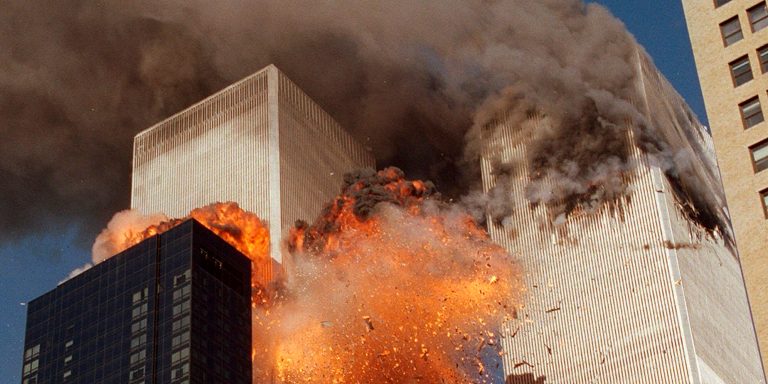
On the twenty-five-year anniversary of the terrorist attacks of September 11, 2001, the organization that masterminded them, al-Qaeda (AQ), is a shell of its former self. Al-Qaeda core, or central, is headed by an aging jihadist named Saif al-Adel, the de facto Emir of the group, who has allegedly been living under near house arrest in Iran for the past two decades (though some reports suggest that he relocated to Afghanistan). The group itself has failed to mount a high-profile attack in the West in many years, and its propaganda barely resonates with the younger generation. The Islamic State (IS), al-Qaeda’s erstwhile progeny that supplanted it and went on to build a proto-state in the Levant, has also been significantly degraded, the result of an aggressive U.S.-led, internationally supported counterterrorism approach that included a ground offensive backed by a relentless drone campaign.
And yet, both groups are living vicariously through their satellites and franchise groups. From the Sahel to Somalia, al-Qaeda affiliates Jama’t Nusrat al-Islam wal-Muslimin (JNIM) and al-Shabaab are among the organization’s strongest performers, controlling large swaths of territory and growing sizeable war chests. In Somalia, al-Shabaab has shown it can fight as much as it can govern and remains a potent force in the Horn of Africa. For the Islamic State, its affiliate in South and Central Asia, Islamic State Khorasan Province, or “IS-K,” has proven that it retains the capability to launch external operations, as it did with high-profile attacks in Iran and Russia in 2024, and a series of near-misses targeting European cities including Vienna and Paris. Islamic State’s Sahel Province, meanwhile, has shown its intent and capability to launch transnational plots into North Africa and further into the Iberian Peninsula. Other areas where the Islamic State has maintained a presence, including Yemen and the Philippines, are not currently hotspots for IS activity, but changing geopolitical dynamics can always shift that equation.
Perhaps, most strikingly, while Islamic State is far from its heyday as a proto-state in the Levant, it has been able to maintain a steady drumbeat of small-scale attacks and plots outside of its areas of operation by its supporters worldwide. It has been able to continue to inspire homegrown violent extremists to conduct attacks in the West through its vast, calibrated social media presence. A combination of recycled battle footage, new attack claims, operational guidance, and doctrine-related pieces produced by its official media apparatus to incite attacks is complemented by a vast ‘supporter’ ecosystem that produces glossy video compilations, memes, and DIY guides on operational security and attacks. Indeed, the Islamic State’s online supporter ecosystem has been at the forefront of adapting content to mimic the younger generation’s aesthetic preferences, including content whose format is clearly inspired by far-right memes and online culture. Inspired plots by supporters can be small-scale but also highly lethal, as seen last year, bookending 2025 with inspired attacks in New Orleans and Sydney, Australia. Attacks like these have become less common than when the Islamic State was at its apex, but they clearly demonstrate that jihadist propaganda still has the ability to radicalize homegrown violent extremists to commit acts of terrorism in their home countries.
Historically, the global jihadist movement has flourished when Western security efforts are focused elsewhere, as they arguably are at the moment. With conventional military conflicts continuing to rage in Ukraine and Iran, the United States is focused on great power competition, missile defense, and leveraging artificial intelligence in national security and defense. Resources allocated for counterterrorism have dwindled, including funding, personnel, and bandwidth. And any number of geopolitical events could breathe new life into some of the terrorist groups that continue to swear allegiance to al-Qaeda and the Islamic State. From Yemen to Mali to Pakistan, civil war and spreading unrest can provide much-needed space to terrorists, insurgents, and militias. So, while the United States is arguably more prepared today to deal with the threat posed by transnational terrorist groups, it is also true that in some ways that al-Qaeda’s founder and longtime leader, Osama bin Laden, achieved what he set out to do: ignite the flame of jihad throughout the world, allowing it to burn, fester, and spread, providing jihadists with new opportunities to destabilize countries and regions where they operate and ensure that jihadists live to fight another day.
And while few would credibly argue that terrorism presents an imminent existential threat, what is clear, and has been since the terrorist attack that sparked World War I (the killing of Archduke Franz Ferdinand by an assassin in Sarajevo), is that one single terror attack has the potential to drag nations into war. Hamas reminded the world of this on October 7, 2023, and a Lashkar-e-Taiba (LeT) front group nearly did the same in April 2025 with an attack in Kashmir that brought two nuclear-armed neighbors to the brink of conflict. The emotive power and psychological impact of terrorism have the ability to cause damage far beyond the initial attack itself. What this means is that, even in a relatively attenuated state, jihadist groups still can disrupt the global security landscape and upend the foreign policy agenda of nation-states, even as most have moved on from the Global War on Terrorism, making it unwise to push this issue entirely to the back burner.
The current retreat from counterterrorism collides with three key realities for the United States and its allies: old safe havens are re-establishing, new ones are forming, and lone acts by homegrown violent extremists require a counterterrorism response that looks distinctly different than the one leveraged during the Global War on Terrorism. The current approach, entirely kinetically focused, does not account for the substantive domestic character of most terrorist plots threatening the United States. The emergence of ‘fast-food’ terrorism, where radicalization happens rapidly in young individuals, driven more by emotion such as anger, status-seeking, or fascination with violence as an aesthetic, than any deep ideological commitment, cannot rely on an exclusively law enforcement-based intervention. Additionally, the politicization of the term terrorism itself risks severely damaging the legitimacy of the entire counterterrorism apparatus.
Above all, this silver anniversary of the 9/11 attacks should remind us of the great sacrifice it took to make such vast progress in mitigating the terrorist threat. As Ali Soufan writes, “In a sense, 9/11 is the day that never truly ended. The long tail of that tragic day — and the road it set America, and indeed the rest of the world, upon — holds lessons we still don’t fully grasp.” The past twenty-five years have shown us that significant investment, sacrifice, and learning were required; that we cannot become complacent; and that we should keep learning from our own errors in responding to the threat.